"I had such a wonderful experience with this company and their performance at my home. They did such a fantastic job and…"
Spencer Flynn


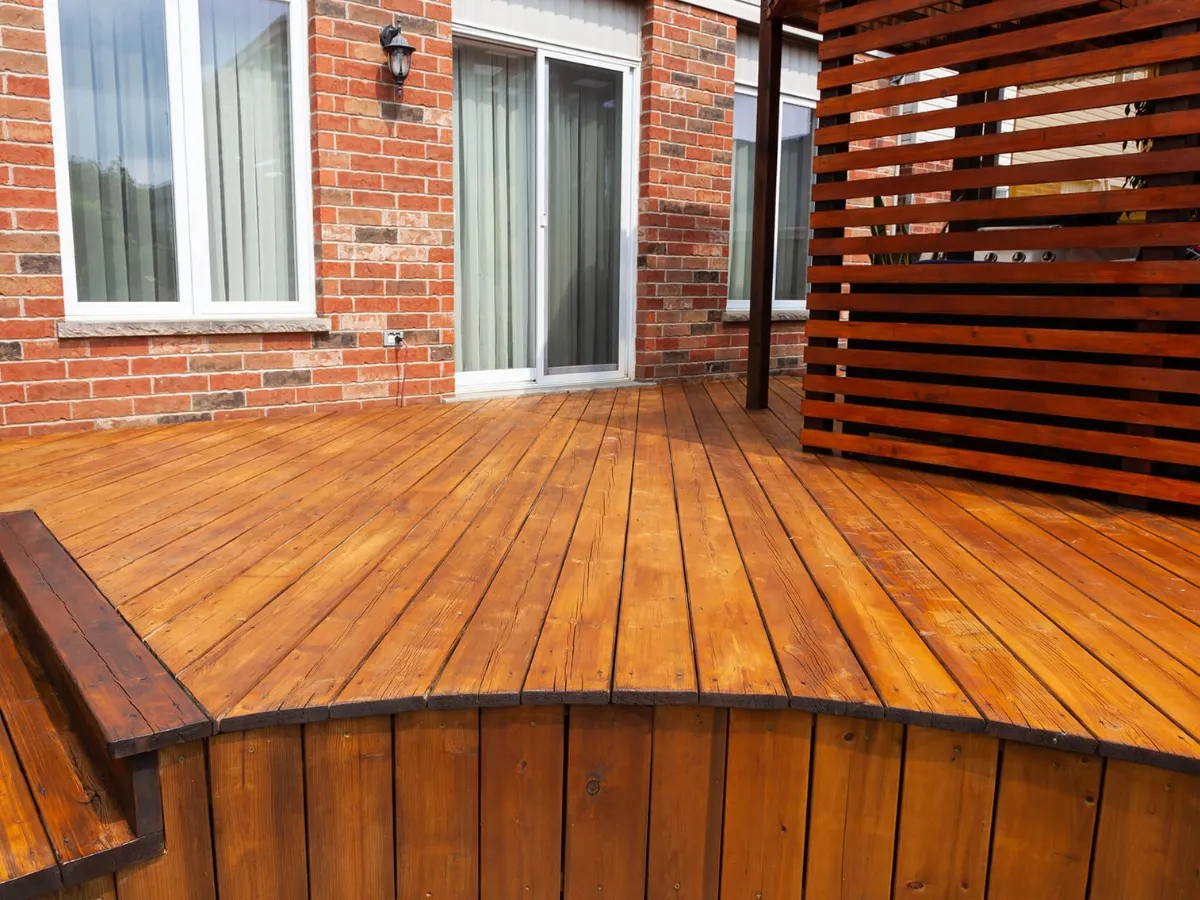
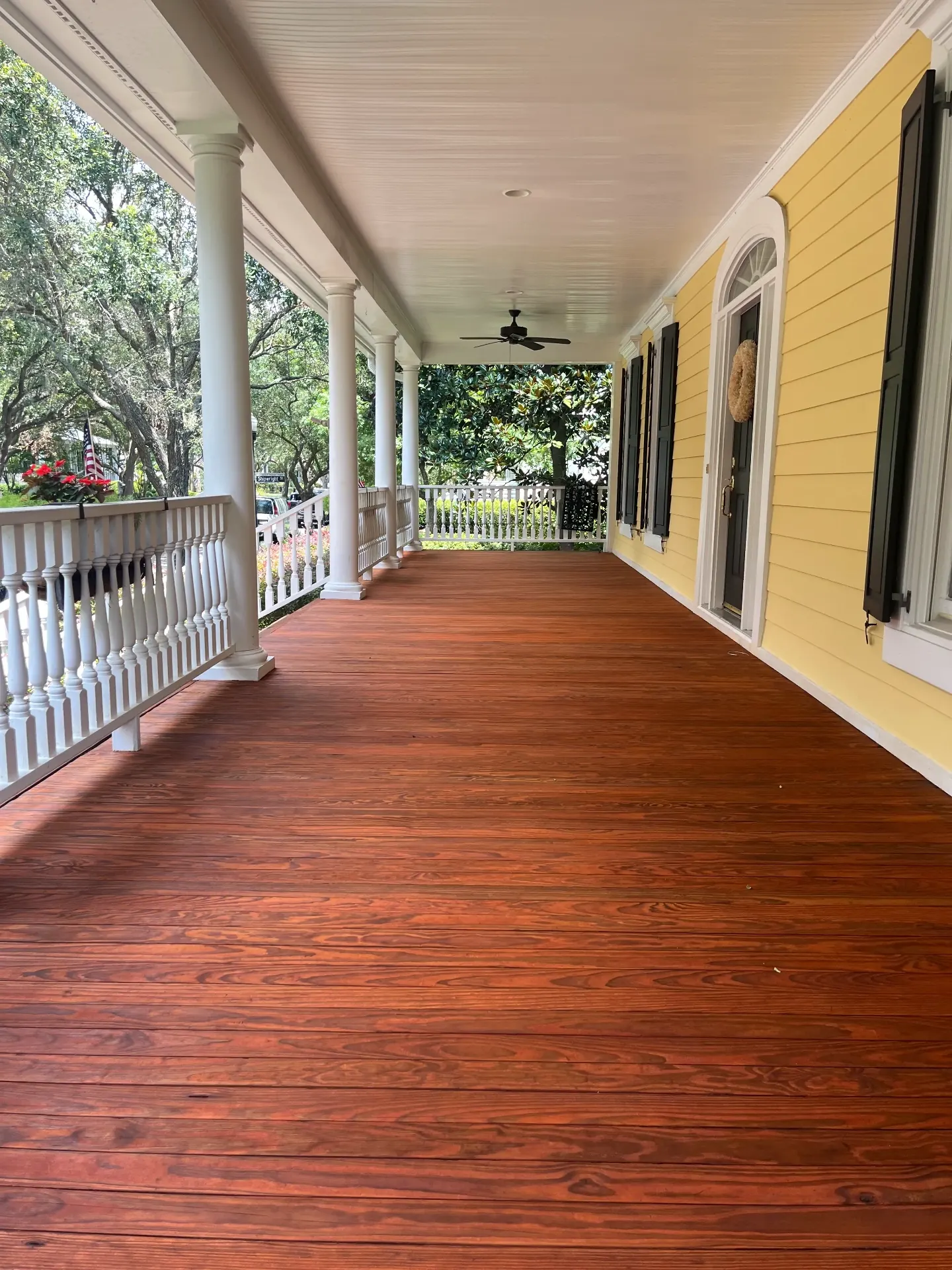
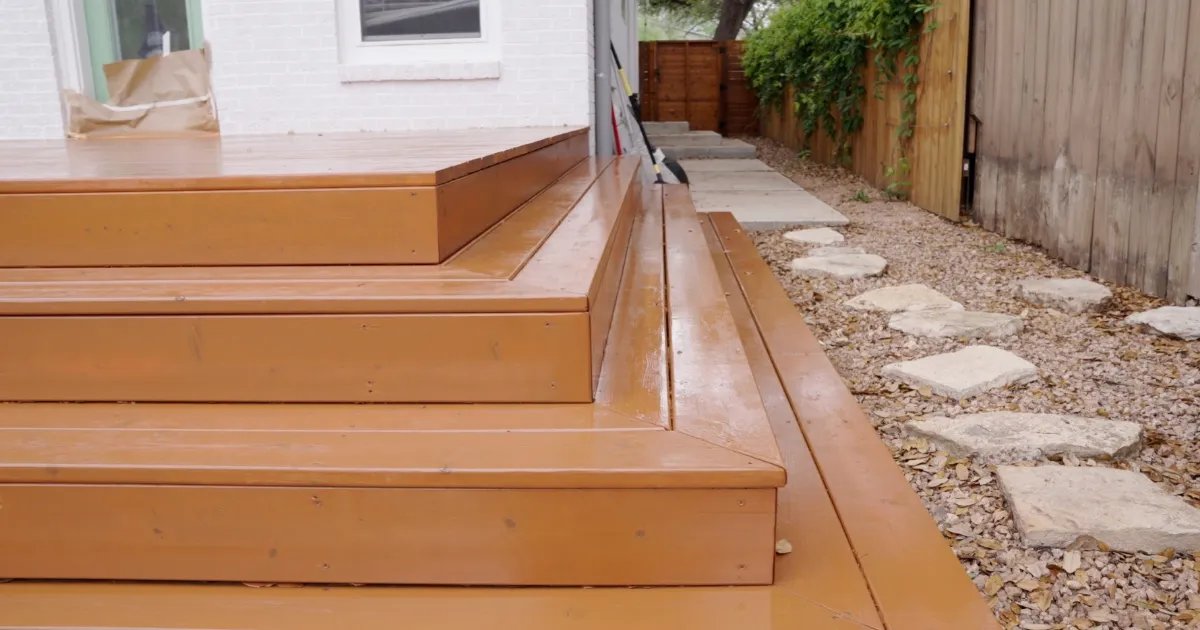
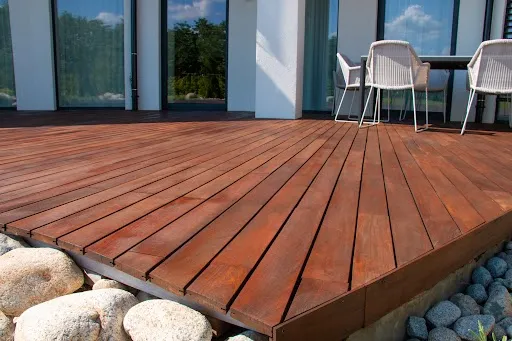
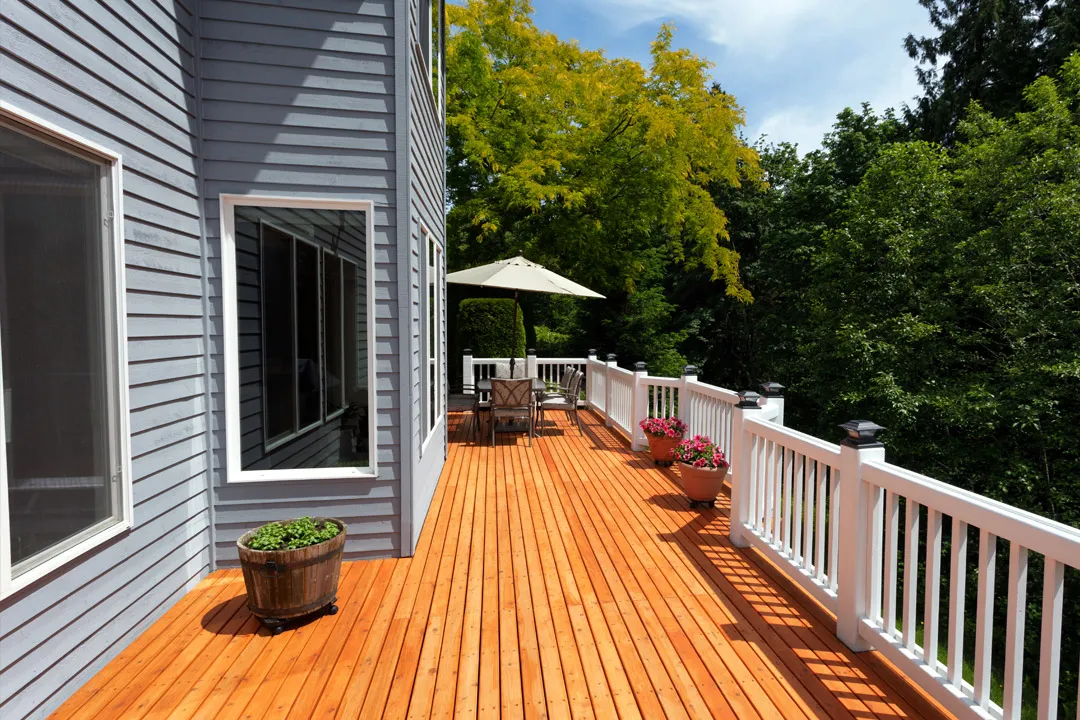
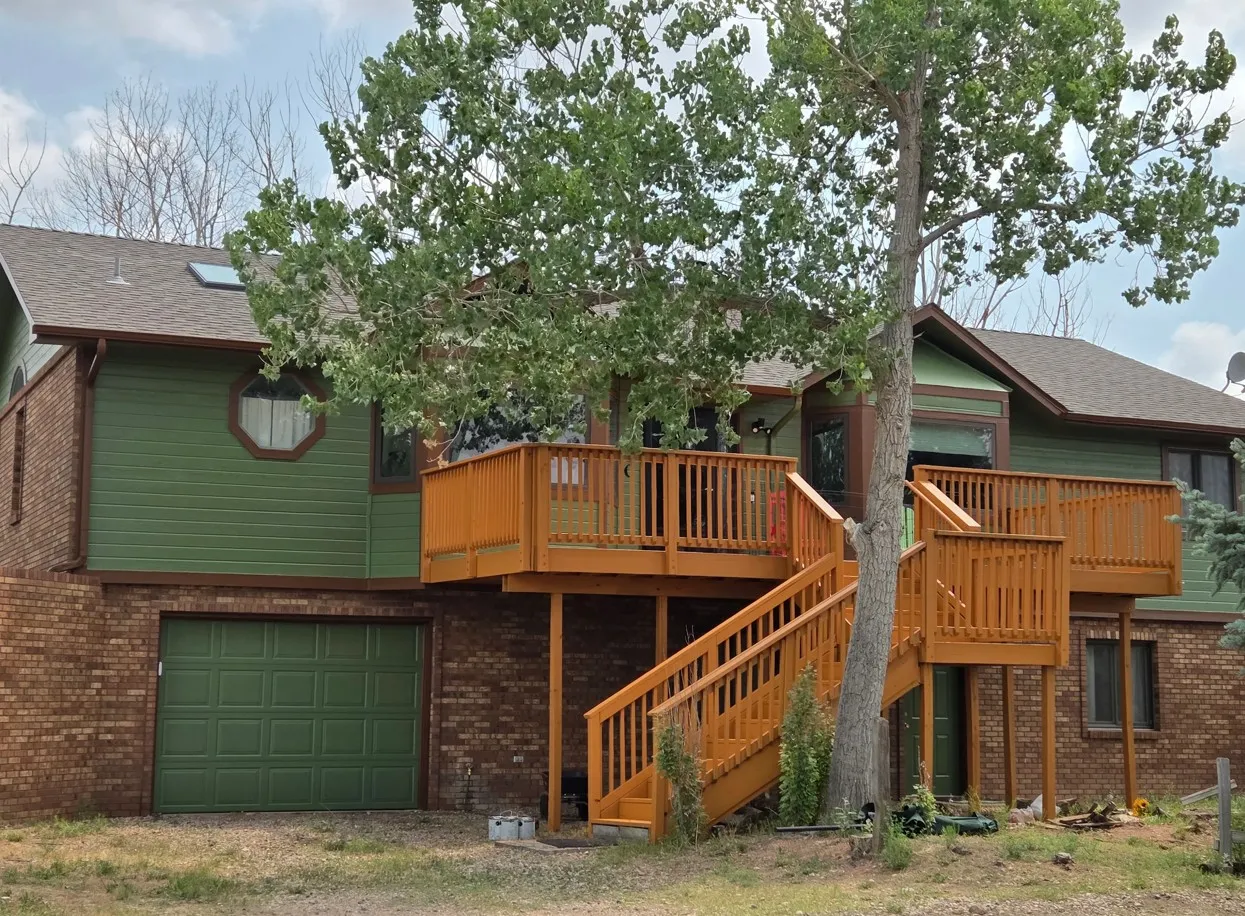
Decks and docks on the First Coast take a beating from UV, salt drift, humidity, and pop-up thunderstorms, and the wood needs regular staining to survive. Our crews clean, prep, and stain wood surfaces from Neptune Beach and Atlantic Beach out to Green Cove Springs and Middleburg.

We inspect your First Coast deck for structural issues, loose boards, UV damage, and surface condition to determine the best staining approach for your wood type, cedar, pine, or composite.
Deck Inspection. We inspect your First Coast deck for structural issues, loose boards, UV damage, and surface condition to determine the best staining approach for your wood type, cedar, pine, or composite.

We power-wash the deck surface, sand rough or splintered areas, and apply premium penetrating deck stain with brushes and rollers for deep wood protection against The First Coast's intense UV and moisture.
Clean, Sand & Stain. We power-wash the deck surface, sand rough or splintered areas, and apply premium penetrating deck stain with brushes and rollers for deep wood protection against The First Coast's intense UV and moisture.

We walk the completed deck staining with you, check for even coverage and penetration, and provide maintenance tips to extend the life of your stain in Central Florida weather.
Final Inspection. We walk the completed deck staining with you, check for even coverage and penetration, and provide maintenance tips to extend the life of your stain in Central Florida weather.
Number of Territories
0+
Number of Paint Jobs
0+
5-Star Reviews5-Star
Reviews5 Star Reviews
0+
"I had such a wonderful experience with this company and their performance at my home. They did such a fantastic job and…"
Spencer Flynn
"Excellent painting service. Andrés López was very professional from the first contact, meeting deadlines and delivering…"
Viviana Torres
"I had a great experience with this painting company especially with Andres. He was an excellent person from start to fin…"
Yamilet López
"Can't say enough about the job Junior and Fernanda did on our interior and outside stucco. They were attentive to detail…"
Brian Wheelis
"I had such a wonderful experience with this company and their performance at my home. They did such a fantastic job and…"
Spencer Flynn
"Excellent painting service. Andrés López was very professional from the first contact, meeting deadlines and delivering…"
Viviana Torres
"I had a great experience with this painting company especially with Andres. He was an excellent person from start to fin…"
Yamilet López
"Can't say enough about the job Junior and Fernanda did on our interior and outside stucco. They were attentive to detail…"
Brian Wheelis
"I had such a great experience with this painting service. A friend recommended them and I'm so glad they did. They were…"
Veronica Pulido
"Excellent job all around. Incredibly communicative and punctual and takes the time to quickly understand your vision. Ev…"
Kris Hodges
"Thank you for the work you did in my house, the paint turned out just the way I wanted, and my living room looks like ne…"
Julieta Muñoz
"I had a great experience with the company and great professionalism from Ericsson, great communication and a great attit…"
Giovanni Garayua
"We've collaborated with That1Painter multiple times on different projects here in Austin, everything has always been smo…"
flexpainterstexas
"I'm very happy with the great job you did in my house. I highly recommend you and will continue working with you. Thanks…"
Natalia Castaño
"I had my full interior painted with That1Painter and I'm genuinely impressed. The whole process felt organized, clean an…"
St Luka
"I've been working with Kay from That 1 Painter, and he's an excellent professional. Kay has a remarkable work ethic, alw…"
Alexei Racila
"Had a great experience with That1Painter. They painted our kitchen and the result turned out beautiful, clean lines, smo…"
Victor Ross
"Herman and his crew are exceptional! Their work is beautiful and the professionalism is above and beyond. Will use him f…"
J Bammerlin
"They did a great job and didn't stop until the job was completed. They mean it when they say satisfaction guaranteed!"
Naveen Reddy
"I am an interiors designer and worked with Stephanie from That 1 Painter on a project for one of my clients. I couldn't…"
Monica Diaz
"Excellent company, thank you for painting the exterior of my house. You truly met all my expectations, great job! Thank…"
Carol Naranjo
"Excellent work and great service from the team! Thanks Andres for your support."
Kelly Aguirre
"Excelente servicio, muy responsables y el trabajo 10/10 me pintaron la casa y los contrataría otra vez, recomendado, And…"
Ramon Duarte
"I highly recommend this company 100%! They did an amazing job painting my entire house, and I couldn't be happier with t…"
Wilson Arocho
"We had a wonderful experience working with Anji from That 1 Painter! He was professional, on time, and went above and be…"
Carolina Zuniga
"Excellent service and professionalism. Ericsson, the project manager, demonstrated outstanding communication and attenti…"
Arick Liceth Zambrano
"These guys are amazing. Perfect job. Professional and very accommodating. I can't wait for them to do the outside of the…"
Kathy Mitchell
"That 1 Painter met my expectations and beyond. Tommy and his painters were very thorough. The house looks great. I highl…"
Brenda Danks
Average ROI on wood deck improvements
Zonda Cost vs. Value, 2024
Maximum added resale value
Angi
How often an untreated wood deck needs retreatment
industry standard
Trusted Paint Partners
A well-stained deck can outlast an unsealed one by a decade. Here is what to know about deck staining on the First Coast.
We spec penetrating oil-based and premium hybrid stains from Sherwin-Williams SuperDeck, Benjamin Moore Arborcoat, and Cabot for most deck-staining projects on the First Coast. Semi-transparent finishes are the best long-term balance of color, protection, and grain visibility. On the First Coast, deck prep is a serious step, not a wave-of-a-wand pressure wash. Our crews clean the deck with a wood cleaner sized for the level of mildew, tannin bleed, and prior finish present, then apply a wood brightener that neutralizes the cleaner and reopens the grain for absorption. Every deck project starts with a free in-home estimate where our project manager measures square footage, notes wood species, and documents needed repairs. We deliver a written scope covering cleaning, brightening, board replacement, stain product, and application method.
Solid stains provide the longest color life and best UV protection but hide grain and can peel if the substrate is damp. Transparent stains show off wood grain beautifully but sacrifice UV protection in the Northeast Florida sun. We match product to your goals and to the wood species during the estimate. We allow the wood to fully dry before staining, usually two to three days in dry weather, longer in humid stretches. Staining wet wood is one of the most common failure modes in Florida, and we do not skip that dry window. On the job we protect landscaping, prep the wood, allow it to dry, and apply stain by brush and pad or spray-and-back-brush depending on the deck. A final walkthrough confirms coverage, and the 3-year transferable warranty documents workmanship.
Walk every board and check for soft or spongy sections, popped fasteners, splintered edges, and mildew streaks. Beach-community decks in Jacksonville Beach, Atlantic Beach, and Neptune Beach also see fastener corrosion from salt drift, and dock boards see harsher exposure yet. UV is intense in Northeast Florida, and it destroys unprotected wood fiber over a summer or two. Salt drift, humidity, and pop-up thunderstorms compound the damage. That is why the right stain, applied on sound, dry wood, is one of the highest-return maintenance moves on a First Coast home.
We replace failing boards, reset fasteners, and address rot before staining so the new finish is going onto sound wood. Boards that no longer bead water are ready for prep and refinish. Homes closer to the Atlantic see harsher conditions than inland Green Cove Springs or Middleburg, and we tailor product choice accordingly.
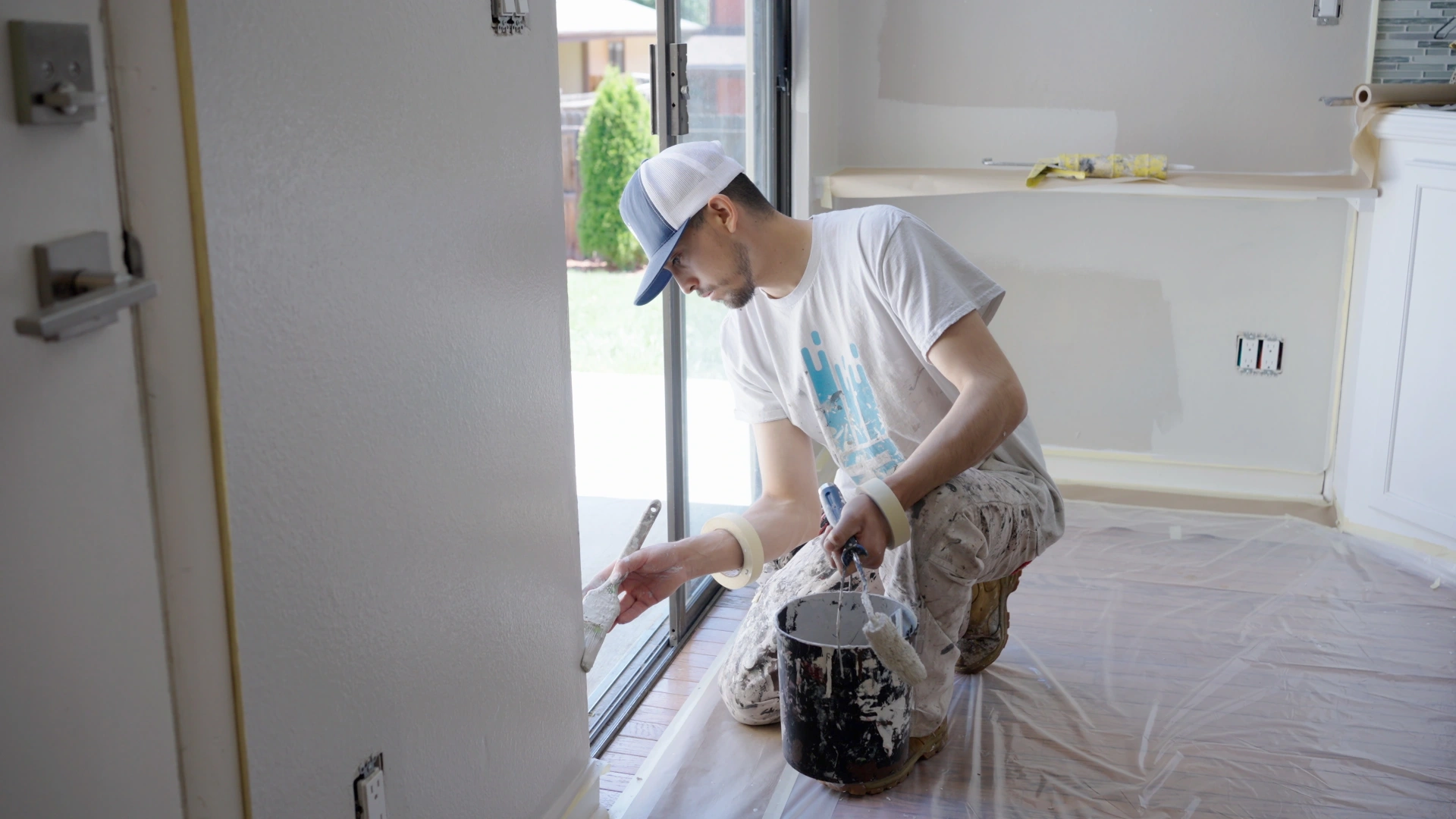
Your peace of mind, at the top of mind with our three-year transferable warranty. Covers the painting job, even if you sell the house.
Download WarrantyExpert tips, how-to guides, and inspiration for your next deck staining project.

The First Coast's intense UV and rain mean most decks need re-staining every 2–3 years for optimal protection.
Read More →
Stain preserves wood grain and is easier to maintain. Paint offers more color options but can peel.
Read More →
Natural wood tones and warm grays dominate The First Coast's outdoor living spaces this year.
Read More →Swipe to explore →
The First Coast's intense UV and rain mean most decks need re-staining every 2–3 years for optimal protection.
Read More →Stain preserves wood grain and is easier to maintain. Paint offers more color options but can peel.
Read More →Natural wood tones and warm grays dominate The First Coast's outdoor living spaces this year.
Read More →